
Our Story
A little order in the places you use every day can make a whole morning feel calmer.
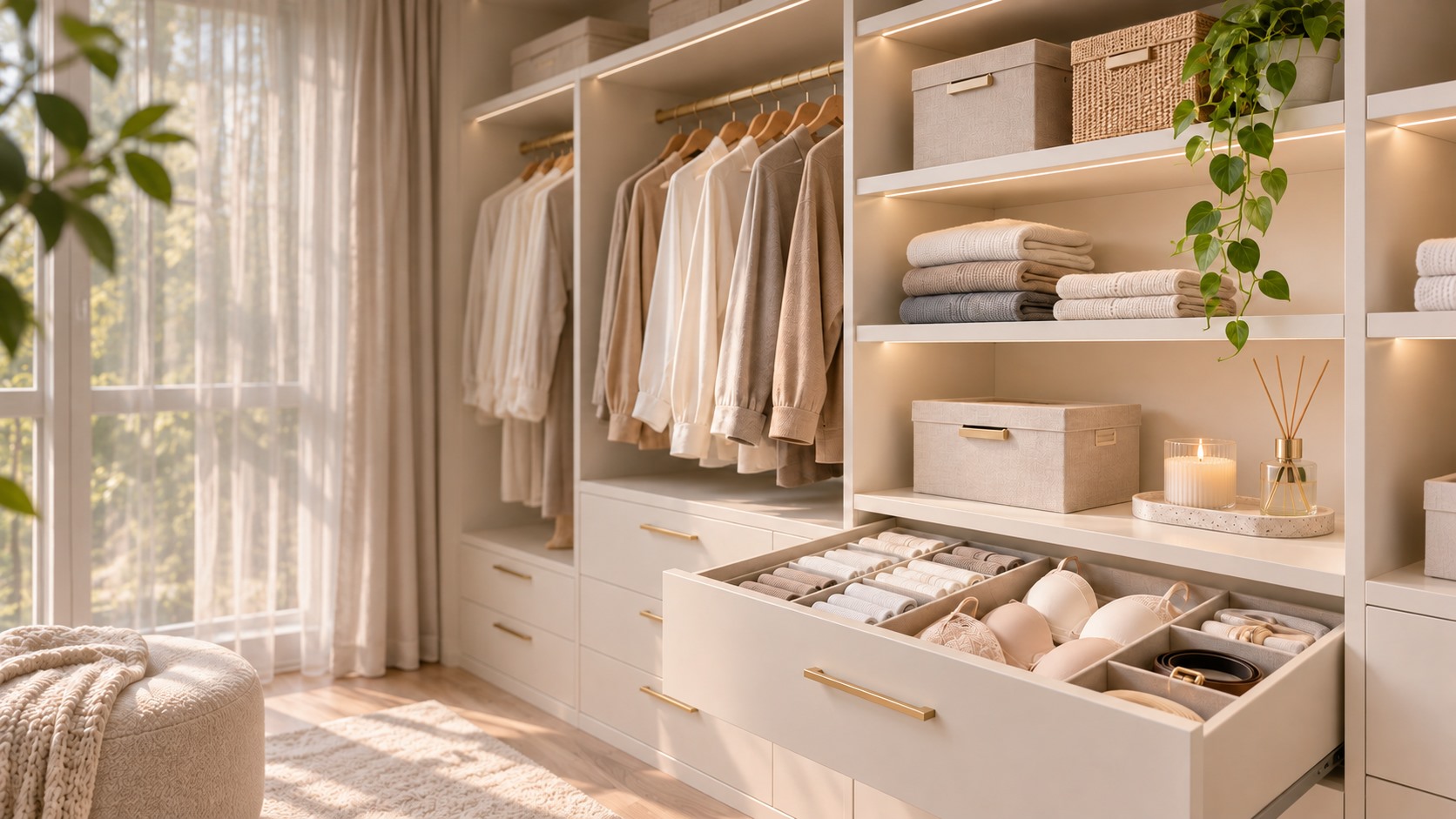
The drawer you open every morning
There’s a small pleasure in finding what you need with one hand. A pair of socks sits where you left it. You lift out a sweater and the stack beside it stays put. Those moments shape how we choose the organizers in our collection.
Here in Aurora, Colorado, we think about the other end of the day, too. When the clean laundry comes back, is there a place to set it down? Can a scarf go straight into its drawer? For us, a calmer home starts with making those ordinary things a little easier.
Open compartments
Give the things you use together a place you can see at a glance.
Materials you can picture
See bamboo, fabric and clear trays up close before choosing a finish.
Easy to put back
The right spot should be just as easy to reach at the end of the day.
Room for change
Move a tray or shift a bin when a new season changes what you reach for.
When the laundry comes home
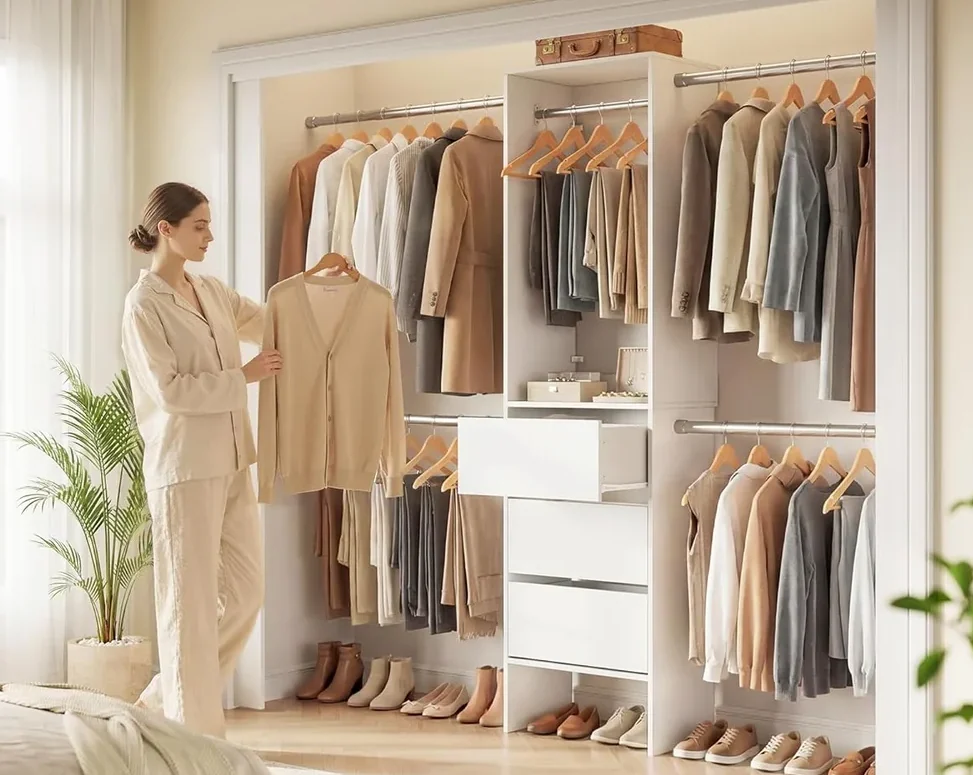
A closet looks lovely when everything is freshly folded. The moment we have in mind is a Wednesday evening, with a basket on your hip and one hand free.
A shelf at elbow height gives the sweater in your hand somewhere to land. A low rail lets a child hang up a cardigan. Both start with the same question: who puts this away, and what can they comfortably reach?
A handle at the front
On a low shelf, the handle is the part you find first. This linen pull-out drawer slides forward so the folded pieces at the back come into view. When you put it away, the row is tidy again.
See the pull-out drawers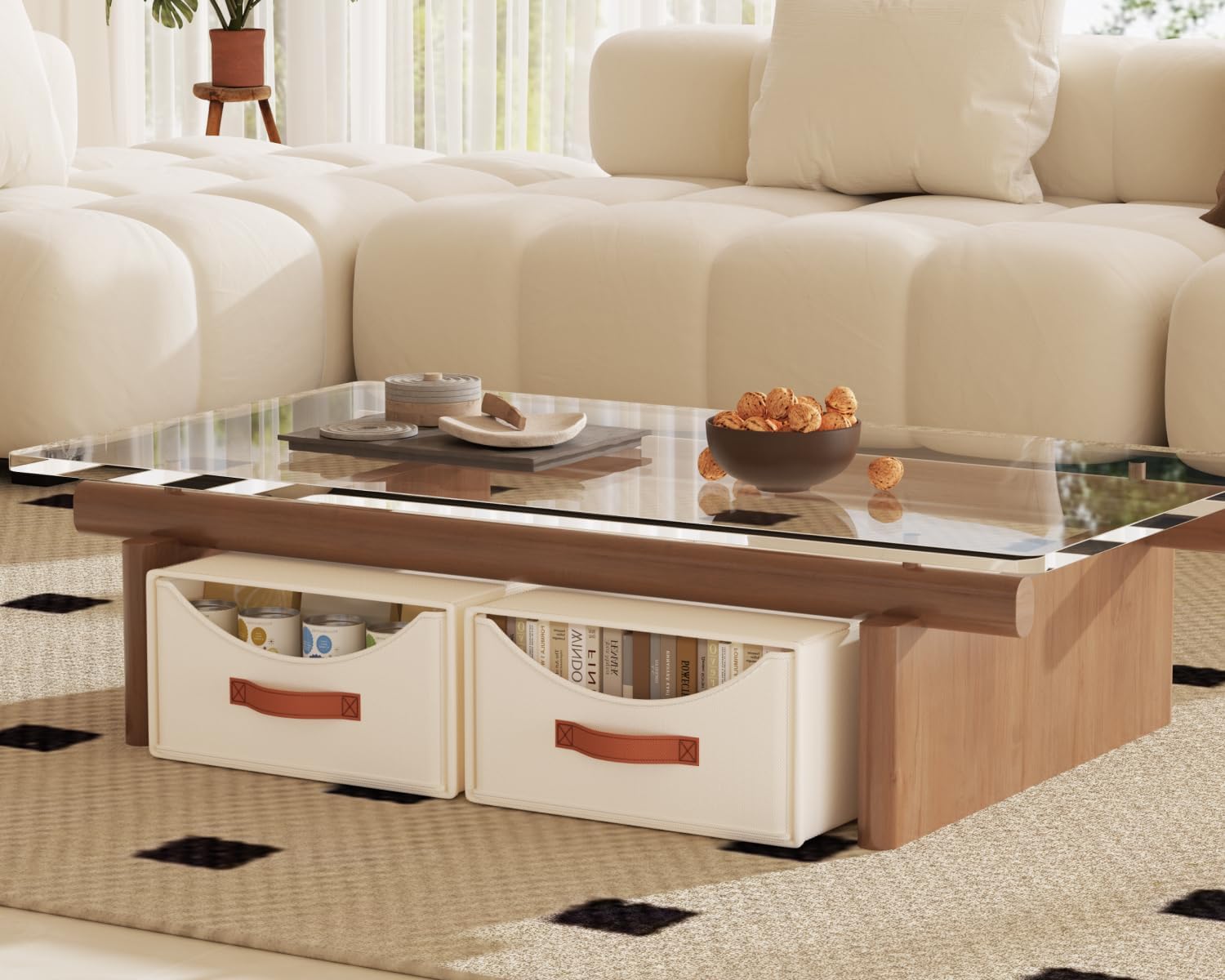
How we find a place for things
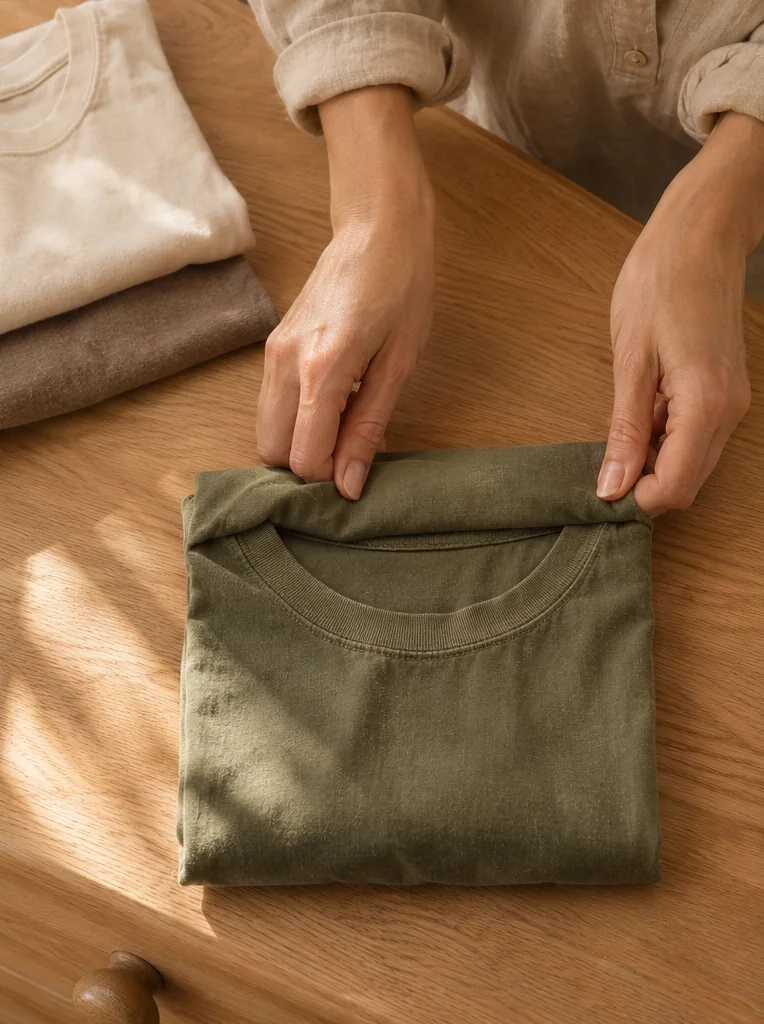
Start with the fold
Fold a favorite shirt the way you usually do. That little rectangle tells you how much space a row of shirts will need.
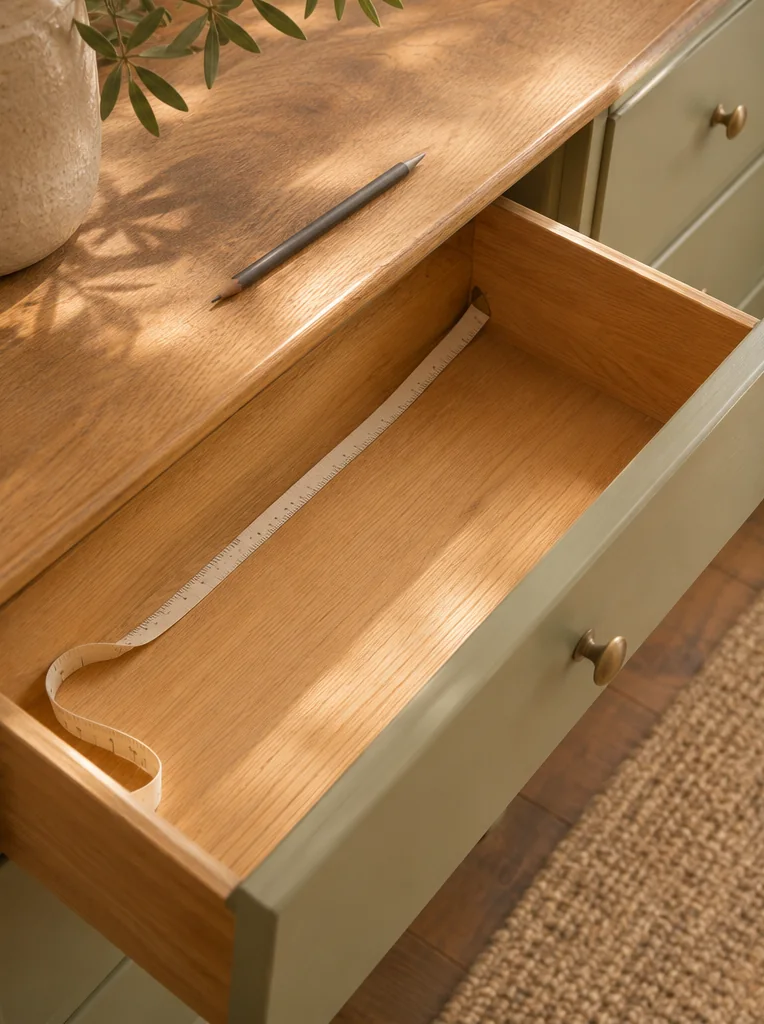
Measure the opening
Measure inside the drawer, then check the clearance above it. A folded cuff should pass under the frame as the drawer closes.
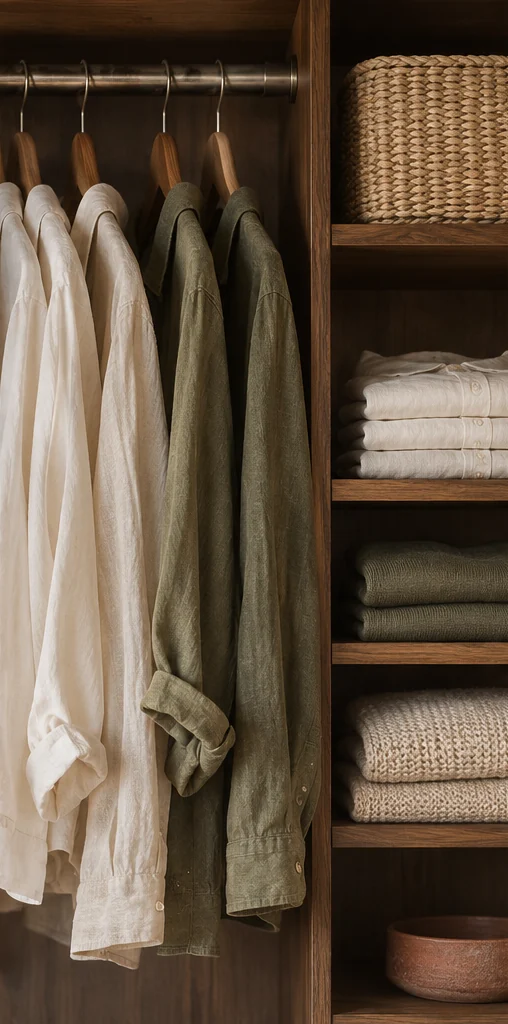
Try it for a week
Notice what ends up on the chair. If it’s always the same cardigan, a spot near the front of the rail might suit it better.
Make it yours
Two people can share a wardrobe and use it quite differently. Leave space for the things each of you likes to keep close. When you’re ready to try a tray or a shelf, our guide shows which measurements to take.